Feeding the World, Poisoning the Planet: The Unfinished Engineering Problem of Synthetic Nitrogen
In 1909, Fritz Haber demonstrated that nitrogen gas could be pulled from the air and converted into ammonia under high pressure and temperature. Within a decade, Carl Bosch had scaled the reaction into an industrial process. The Haber-Bosch process, as it became known, is widely credited with enabling the food production that sustains roughly half of all humans alive today. It is also, by most measures, one of the most environmentally disruptive technologies ever deployed at scale.
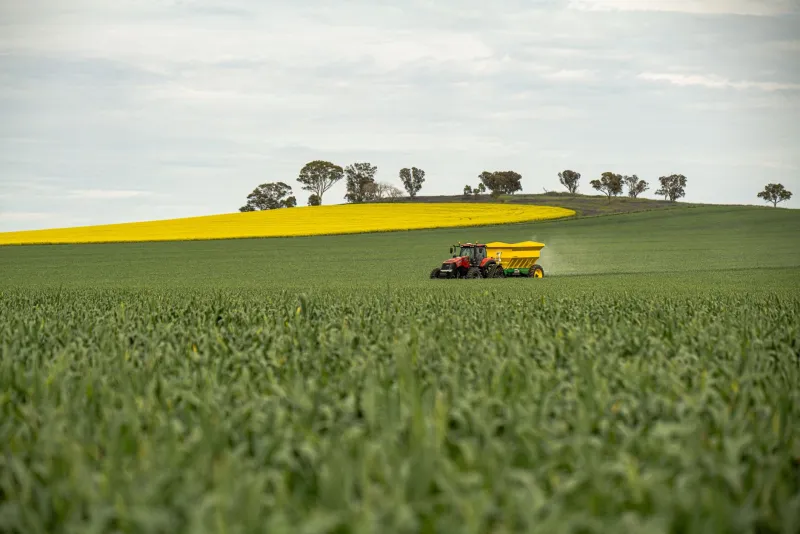
American farmers apply approximately 20 million tons of nitrogen fertilizer annually. A significant fraction of that never reaches a crop. It leaches into groundwater, volatilizes into the atmosphere as nitrous oxide—a greenhouse gas roughly 270 times more potent than carbon dioxide over a century—or runs off into rivers and coastal zones, feeding algal blooms that suffocate aquatic ecosystems. The Gulf of Mexico dead zone, now a recurring fixture in environmental reporting, is a direct downstream consequence of Midwest fertilizer application.
The engineering community has noticed. Over the past decade, a wave of agtech companies has promised to reduce, replace, or radically optimize nitrogen use. The ambition is genuine. The results, so far, are more complicated.
Why Precision Application Is Necessary but Not Sufficient
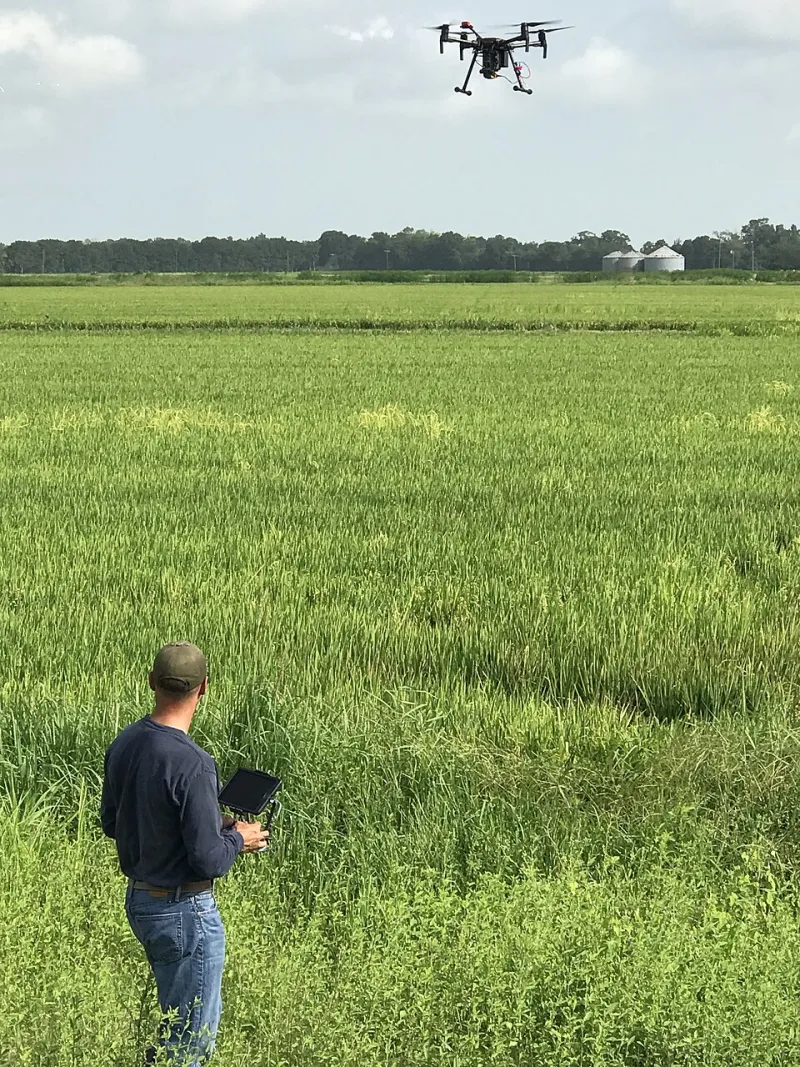
The most commercially mature category of nitrogen-reduction technology involves precision application: using sensors, variable-rate spreaders, and machine learning models to deliver fertilizer more accurately, reducing excess without sacrificing yield. Companies operating in this space have attracted substantial investment, and the underlying logic is sound. If a farmer can apply nitrogen only where and when a crop actually needs it, waste should fall dramatically.
In practice, the gains are real but bounded. Studies consistently show that even optimally managed synthetic nitrogen applications result in significant losses to the environment. The chemistry is partially to blame. Nitrate ions are highly soluble and mobile in soil; once applied, they do not wait for a plant to absorb them. Soil microbial activity converts nitrogen compounds into gaseous forms regardless of how precisely the initial application was timed. Precision agriculture tools can reduce the volume of fertilizer applied, but they cannot fundamentally alter the behavior of nitrogen once it enters a dynamic soil environment.
There is also an adoption ceiling. Variable-rate application equipment requires capital investment that many smaller operations cannot justify. The data infrastructure necessary to support field-level nitrogen modeling—discussed at length in earlier Agineer coverage of smart soil sensors—remains inconsistent across much of rural America. Precision tools work best when the underlying data is dense and reliable. In many regions, that condition is not yet met.
The Biological Alternative: Promising, Fragile, and Slow
A more fundamental approach involves replacing synthetic nitrogen with biologically fixed nitrogen—essentially, engineering crops or soil microbiomes to do what legumes have always done naturally: draw nitrogen directly from the atmosphere through symbiotic relationships with bacteria.
Several well-funded startups are pursuing variations on this strategy. Some are engineering microbial inoculants designed to colonize the root zones of non-legume crops like corn and wheat, stimulating nitrogen fixation without chemical inputs. Others are attempting to transfer the genetic machinery for nitrogen fixation directly into cereal crops—an enormously complex molecular engineering challenge that has occupied researchers for decades without yielding a commercially deployable result.
The microbial inoculant approach is closer to market. A handful of products have received regulatory clearance and are being sold to American farmers today. Independent field trials, however, paint a mixed picture. Performance varies considerably across soil types, climates, and farming systems. Microbial communities are not static; they respond to temperature, moisture, tillage practices, and the presence of synthetic fertilizers themselves, which can suppress the very bacteria an inoculant is trying to establish. Convincing a farmer to reduce synthetic nitrogen inputs while trialing a biological product that may or may not perform is a difficult commercial proposition.
The deeper genetic engineering pathway—building nitrogen-fixing cereals from the ground up—faces a different class of obstacles. Nitrogen fixation is metabolically expensive; plants that fix their own nitrogen may yield less than those that receive it externally. Engineering the process efficiently enough to be agronomically competitive represents a challenge that current CRISPR and synthetic biology toolkits have not yet solved, though researchers at institutions including the Innovative Genomics Institute and several land-grant universities are making incremental progress.
The Economic Gravity of Haber-Bosch
Beyond the technical barriers, any honest assessment of the nitrogen problem must reckon with economics. Synthetic nitrogen fertilizer is cheap. Decades of natural gas infrastructure, established manufacturing capacity, and deeply embedded supply chains have made it the default input for American commodity agriculture. The entire crop insurance and commodity support system is calibrated around yield expectations that assume synthetic nitrogen availability.
Alternative nitrogen strategies—whether biological inoculants, cover cropping systems, or precision reduction programs—typically require upfront investment, tolerance for yield variability during transition, and agronomic knowledge that not every operation possesses. The return on investment horizon is longer than a single growing season, which creates friction with the financial realities facing many American farm operations.
Regulatory pressure could shift this calculus. The European Union's Farm to Fork strategy has set explicit targets for reducing synthetic fertilizer use, creating a policy environment that is beginning to accelerate adoption of alternatives. The United States has moved more slowly. Without comparable policy signals—whether through nutrient management regulations, fertilizer taxes, or enhanced incentives for biological alternatives—the economic gravity of Haber-Bosch is difficult to overcome through technology alone.
Engineering the Transition, Not Just the Replacement
The most intellectually honest framing of the nitrogen problem may be this: the goal should not be a single engineered replacement for synthetic fertilizer, but a managed transition toward a portfolio of nitrogen management strategies that collectively reduce environmental loading without compromising food security.
That transition requires investment in several areas simultaneously. It requires better sensors and models that can predict crop nitrogen demand with greater accuracy. It requires biological products that are more consistent across diverse field conditions. It requires breeding programs that optimize crops for lower nitrogen inputs. And it requires the data infrastructure and extension capacity to help farmers navigate a more complex input landscape.
None of these components is individually sufficient. Silicon Valley framing—find the breakthrough, scale it, declare victory—fits poorly against a problem that is simultaneously chemical, biological, economic, and institutional. The engineers working on nitrogen are not wrong to pursue the tools they are building. They are, however, working on one dimension of a multi-dimensional problem.
Haber-Bosch will not be replaced by a single startup's product launch. It will be gradually displaced by a combination of better technology, smarter policy, and agronomic systems that are designed from the outset to treat nitrogen as a resource to be conserved rather than a commodity to be applied without limit. That is a slower and less narratively satisfying arc than a breakthrough announcement. It is also, based on the current evidence, the more accurate one.