Growing Meat in a Tank: The Bioengineering Ambitions Behind Cultivated Protein
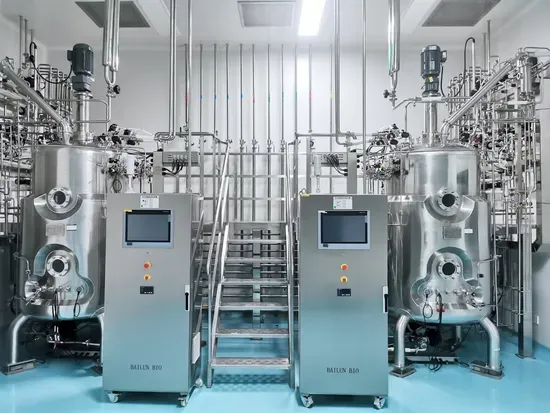
Photo: bioreactor laboratory cultivated meat cell culture fermentation tanks, via image.made-in-china.com
For most of American history, producing a pound of beef meant land, water, feed, and time — often years of it. A growing cohort of bioengineers and food scientists is now asking whether that equation can be rewritten entirely, substituting the pasture with a precision-controlled fermentation vessel and replacing the feedlot with a nutrient broth formulated in a laboratory. The resulting product — cultivated meat, also called cell-cultured protein — sits at the intersection of biotechnology, food science, and agricultural economics, and it is advancing faster than most industry observers anticipated.
What Happens Inside the Bioreactor
The core engineering premise is straightforward in concept, though extraordinarily difficult in execution. Researchers extract a small number of stem cells from a living animal — no slaughter required — and introduce those cells into a liquid growth medium rich in amino acids, glucose, vitamins, and growth factors. Inside a bioreactor, conditions such as temperature, pH, dissolved oxygen, and mechanical agitation are continuously monitored and adjusted to encourage the cells to proliferate and, eventually, differentiate into muscle, fat, or connective tissue.
The bioreactor itself is the central engineering artifact of this industry. Units used in pharmaceutical manufacturing have served as the starting point, but cultivated meat demands different specifications. Food-grade materials, sanitary design standards, and the ability to support anchorage-dependent cells — those that need a physical scaffold to grow on, as muscle cells do — all present unique constraints. Companies such as UPSIDE Foods, based in Berkeley, California, and Good Meat, the cultivated protein division of Eat Just, have each invested heavily in proprietary bioreactor configurations designed to maximize cell density while minimizing contamination risk.
Scaling these systems from benchtop to industrial volume is where the engineering challenge becomes acute. A ten-liter bioreactor behaves very differently from a fifty-thousand-liter vessel. Oxygen transfer rates, shear stress on delicate cell membranes, and nutrient gradients all grow more difficult to manage as volume increases. The biopharmaceutical industry spent decades learning to manage these dynamics for drug production; the cultivated meat sector is attempting to compress that learning curve significantly.
The Growth Medium Problem
Perhaps no single technical barrier has attracted more engineering attention than the composition and cost of cell culture media. Early laboratory protocols relied on fetal bovine serum — a product derived from fetal calf blood — to supply the growth factors necessary for rapid cell proliferation. This dependency was both ethically problematic and economically prohibitive, with serum costs capable of pushing the price of a single cultivated burger into the hundreds of dollars.
The industry has responded with intensive research into serum-free and animal-component-free media formulations. Recombinant growth factors — proteins produced through microbial fermentation rather than extracted from animals — are now central to most commercial development pipelines. Precision fermentation companies, some of them operating in the US Midwest and along the West Coast biotech corridor, are engineering yeast and bacterial strains to produce these factors at scale. As production volumes rise, the cost per gram of recombinant growth factor is expected to fall substantially, though projections vary widely among analysts.
Nutrient recycling within the bioreactor loop also represents a promising avenue for cost reduction. Closed-loop systems that recover and replenish spent media components could meaningfully extend the usable life of each batch, reducing both input costs and waste streams.
Navigating the Regulatory Landscape
In June 2023, the US Department of Agriculture granted its first approvals for the commercial sale of cultivated chicken, clearing UPSIDE Foods and Good Meat to begin limited sales in American restaurants. The milestone was significant, but it also illuminated the complexity of the regulatory framework governing this new food category. Both the Food and Drug Administration and the USDA share jurisdiction over cultivated meat — the FDA oversees cell collection and the early growth phases, while the USDA's Food Safety and Inspection Service takes authority over the production and labeling of the final product.
Labeling remains a contested frontier. The conventional meat industry, represented by powerful trade associations, has lobbied state legislatures across the South and Midwest to restrict the use of terms such as "beef" or "chicken" on cultivated products. Several states have enacted or proposed such restrictions, creating a patchwork regulatory environment that complicates national commercialization strategies. Federal preemption of state labeling laws may ultimately be necessary to provide the market clarity that investors and producers require.
Agricultural Economics and the Decade Ahead
The implications for American agricultural economics are substantial and genuinely uncertain. Cattle ranching supports rural communities across Texas, Nebraska, Kansas, and Montana, and any meaningful displacement of conventional beef production would carry significant social consequences. Industry proponents argue, however, that cultivated protein could expand the overall protein market rather than simply substitute within it, serving export markets and food-insecure populations that current production systems cannot efficiently reach.
From a resource efficiency standpoint, early lifecycle analyses suggest that cultivated meat could require substantially less land and water than conventional beef, though its energy consumption — particularly for maintaining the sterile, temperature-controlled bioreactor environment — remains a genuine concern. The carbon profile of cultivated protein depends heavily on the energy source powering the facility, a variable that aligns the cultivated meat sector with the broader decarbonization trajectory of the US electricity grid.
Investment flows reflect cautious but sustained confidence. Hundreds of millions of dollars have moved into US-based cultivated protein companies over the past five years, though the pace of funding slowed somewhat in 2023 as broader venture markets tightened. The companies that survive the current consolidation phase will likely be those that solve the bioreactor scaling problem while simultaneously driving growth medium costs below the threshold that makes mass-market pricing viable.
Engineering a New Food System
Cultivated meat is not a guaranteed disruption. The engineering barriers are real, the regulatory path remains complex, and consumer acceptance is far from assured. But the underlying science is sound, and the engineering disciplines required — bioprocess engineering, materials science, precision fermentation, and systems biology — are among the most dynamic fields in American technology. The question is not whether bioreactor-grown protein is possible. It demonstrably is. The question is whether the engineering community can make it affordable, scalable, and trustworthy in time to matter.