Steel Hands in the Field: How Autonomous Harvesting Machines Are Reshaping American Agriculture
The Fields Are Waiting
Every September, strawberry growers in California's Salinas Valley face the same arithmetic problem: too many berries, not enough hands. The H-2A agricultural visa program—designed to fill domestic labor gaps with temporary foreign workers—processed more than 370,000 applications in fiscal year 2023, a record that reflects both the scale of American agriculture's workforce dependency and the structural fragility underlying it. A single policy shift, a border disruption, or a public health event can leave fields unharvested and produce rotting on the vine.
It is against this backdrop that autonomous harvesting technology has moved from academic curiosity to commercial urgency. Across California, Florida, Washington State, and beyond, farms are now deploying robots capable of identifying ripe produce, navigating crop rows, and executing delicate pick-and-place operations that were, until recently, considered beyond the reach of machines.
Teaching Machines to See What Farmers See
The foundational challenge in autonomous harvesting is perception. A human picker assesses ripeness through a combination of color, texture, size, and positional context—a cognitive process refined over seasons of experience. Replicating that judgment in software requires sophisticated computer vision systems trained on thousands, sometimes millions, of labeled images.
Advanced deep learning models, particularly convolutional neural networks, now power the visual systems aboard most commercial harvesting robots. Abundant Robotics—before its closure in 2021 underscored the difficulty of commercialization—demonstrated that vacuum-based apple picking guided by real-time image recognition could achieve throughput rates approaching human performance. The company's work laid technical groundwork that subsequent developers have built upon.
Today, Tortuga AgTech is deploying strawberry-harvesting robots in Florida and California that use stereo cameras and custom-trained neural networks to locate fruit within dense canopy structures. The system accounts for partial occlusion—a berry hidden behind a leaf—by predicting fruit position from incomplete visual data, a capability that required years of model refinement.
Harvey, developed by UK-based Dogtooth Technologies and now operating in North American markets, uses a similar multi-camera approach for soft fruit harvesting, with onboard processing fast enough to make pick-or-skip decisions in under a second.
The Mechanical Dexterity Problem
Vision is only half the engineering challenge. Once a robot identifies a ripe strawberry, it must retrieve it without bruising—a constraint that imposes strict requirements on end-effector design, force sensing, and motion planning.
Force feedback sensors embedded in robotic grippers allow machines to modulate grip pressure in real time, applying enough force to detach fruit from the stem without crushing flesh or damaging neighboring unripe berries. This level of tactile sensitivity has been among the hardest capabilities to engineer reliably at scale.
Root AI, acquired by AppHarvest in 2021, developed a tomato-harvesting robot named Virgo that uses a custom gripper designed to replicate the gentle twist-and-pull motion experienced pickers apply. The system combined visual ripeness detection with a proprietary soft-robotics end-effector that could handle the variance in tomato geometry without recalibration between fruit.
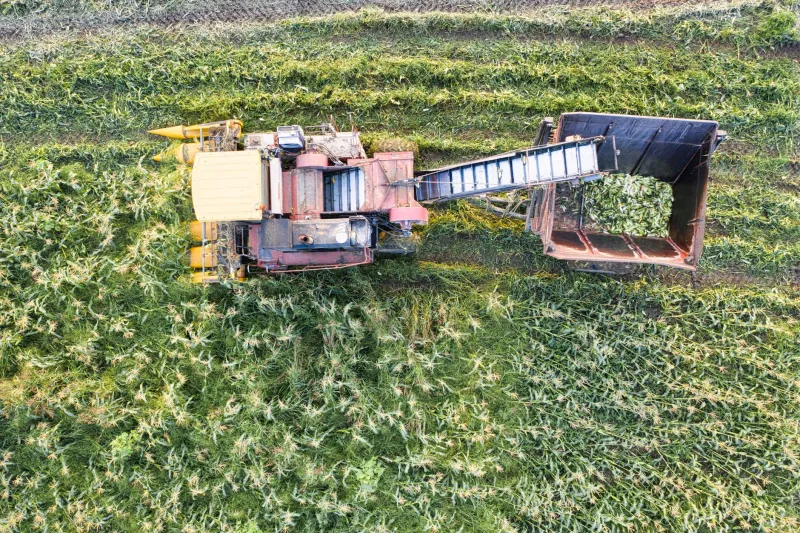
For crops with more forgiving physical properties—lettuce, cabbage, certain leafy greens—harvesting automation has advanced further and faster. John Deere's acquisition of Bear Flag Robotics and its investments in automated machinery reflect the company's recognition that autonomy is the next frontier of agricultural equipment, not a distant aspiration.
From Prototype to Production: What Farmers Are Actually Experiencing
Deployment realities are more nuanced than press releases suggest. Farmers piloting autonomous harvesting systems consistently report a learning curve—both for the technology and for their own operations.
Jim Cochran, a strawberry grower in Santa Cruz County, California, participated in an early trial of a robotic picking system and described the experience as "promising but humbling." The robot performed well in optimal lighting conditions and on uniformly trained plants, but struggled in early morning fog—a near-daily occurrence on the California coast—until the vision system's parameters were adjusted. "It's not plug-and-play," Cochran noted. "You have to adapt your farming practices to the machine as much as the machine adapts to your field."
This observation is echoed by agricultural engineers across the industry. Successful deployment of harvesting robotics frequently requires adjustments to planting density, trellis architecture, and row spacing to accommodate the physical geometry of robotic systems. The farm, in effect, becomes a co-designed environment.
Labor Implications: Displacement or Transformation?
The question of what autonomous harvesting means for agricultural workers is both economically complex and politically sensitive. The American agricultural workforce—disproportionately composed of Latino immigrants, many of whom are undocumented—performs some of the most physically demanding and economically precarious work in the country.
Proponents of harvesting automation argue that robots will address roles that cannot reliably be filled by human workers, reducing crop losses rather than displacing employed people. Critics contend that the technology will accelerate the erosion of agricultural wages and eliminate entry-level rural employment.
The empirical picture is still forming. A 2022 study by the University of California, Davis found that automation adoption in California specialty crop sectors has thus far not produced significant net job losses, partly because labor demand continues to outpace supply. However, the study's authors cautioned that this balance may shift as robotic throughput improves and costs decline.
What appears more certain is that the nature of agricultural labor is changing. Operations deploying autonomous systems increasingly require workers with technical skills—robot maintenance, software calibration, data interpretation—rather than purely manual harvesting capacity. Workforce transition programs, such as those piloted by the California Agricultural Labor Relations Board, are beginning to address this shift, though the scale of investment remains limited.
The Road Ahead
The autonomous harvesting sector is advancing rapidly, but it has not yet solved the full problem. Current commercial systems perform most reliably on a narrow range of crops under controlled or semi-controlled conditions. Extending robotic harvesting to the full diversity of American specialty crops—stone fruits, wine grapes, asparagus, citrus—remains an active engineering frontier.
Improved sensor fusion, combining visual, infrared, and lidar data, will expand the environmental conditions under which robots can operate reliably. Advances in soft robotics will broaden the range of fruit morphologies that machines can handle without damage. And continued reductions in compute costs will make onboard AI processing more accessible for smaller farm operations.
The harvest is not yet fully automated. But the machinery to get there is already in the field.